Q&A: Natalia Rost, President, American Academy of Neurology
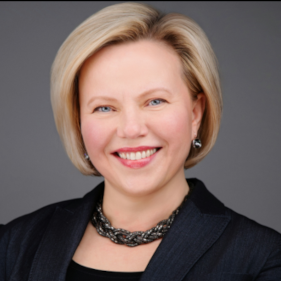
Natalia Rost
Natalia S. Rost, MD, is president of the American Academy of Neurology (AAN), C. Miller Fisher Endowed Chair in Stroke Research at Massachusetts General Hospital, and professor of neurology at Harvard Medical School. An internationally recognized expert in cerebrovascular neuroimaging, she applies big-data approaches to advance personalized stroke care. A clinician-scientist, Rost leads a robust brain health and recovery research program as an MGH Research Scholar and Principal Investigator of the NIH-funded DISCOVERY study. Her leadership and mentorship have earned numerous honors, including the MGH Ray Adams Clinical Mentor Award and multiple AAN leadership and mentorship awards.
NQ: Can you describe the American Academy of Neurology (AAN), its members, and its primary initiatives?
NR: AAN is the leading voice in brain health. As the world’s largest association of neurologists and neuroscience professionals with more than 44,000 members, we offer access to continuing education, essential medical practice tools, research grants, networking, and advocacy opportunities, among other benefits. Our public resources make it easy for patients, caregivers, and anyone interested in brain health to access the latest information and guidance.
Together with our members, the AAN is advancing what’s possible in brain disease treatment, cures, and prevention. It’s all in service of our mission to enhance member’s career fulfillment and promote brain health for all.
NQ: How have AAN members been impacted by the significant changes in federal policy under the current administration?
NR: AAN members are experiencing the effects of significant federal policy changes across research and clinical practice, including reimbursement.
- Research funding and infrastructure: Proposed and enacted reductions in NIH funding and staffing, along with efforts to cap or restrict indirect cost reimbursement, have created uncertainty for neuroscience research programs and strained institutional research infrastructure. These changes have affected the sustainability of federally funded research and the ability to maintain protected research time and core support. This has especially been detrimental to the ability to recruit early career researchers and retain talented investigators in academia across the board. The AAN has actively advocated for stable and robust federal investment in neuroscience research.
- Research regulations and compliance: Updates to NIH policies — including public access requirements and evolving guidance for research involving human subjects — have increased administrative and compliance burdens for investigators and institutions. The AAN has raised concerns about clarity, consistency, and the cumulative impact on researchers.
- Payment and reimbursement: Federal budget actions and Medicare policy changes have continued to place pressure on physician reimbursement, including ongoing concerns about payment cuts and the temporary nature of telehealth flexibilities. Advocacy to stabilize reimbursement remains a priority for the Academy.
NQ: SfN and AAN began to collaborate in 2025. This new relationship has resulted in two webinars and SfN Past President John H. Morrison being invited to speak at the AAN meeting in 2026. Why do you think collaborations like this are important?
NR: The SfN–AAN collaboration reflects our shared commitment to advancing brain health through both science and clinical care. Neurologists understand that, without science, there are no cures for our patients with neurological diseases. Our joint webinars and programming create a forum where clinicians, scientists, and advocates can engage around shared priorities. Right now, we are placing particular importance on federal research funding, coordinated advocacy, and the impact of policy decisions on science and patient care. I was also delighted to join the SfN’s Congressional Leadership visits during their 20th Hill Day on March 18, 2026.
By aligning our voices, we can extend the reach of these conversations to broader audiences. I’d also like to point out I will have Morrison joining me in my Presidential Plenary at the 2026 AAN Annual Meeting. The plenary will engage neurology leadership and scientists in a panel about the future of neuroscience research.
NQ: From your perspective, what is the existing relationship between clinicians like AAN members and academics like SfN members? How could this relationship be strengthened?
NR: Many of the AAN members, myself included, are academics and clinician-scientists, so we have a lot of common shared priorities. Clinicians rely on discoveries generated through basic and translational research to inform patient care, while academic scientists depend on clinical insight to help shape relevant research questions and translate findings into real‑world impact. This is a natural alignment, and it makes our joint effort more meaningful and relevant to the public.
Opportunities to strengthen our connection include creating more structured spaces for sustained dialogue, shared programming that spans the research‑to‑care continuum, and continued collaboration on advocacy priorities that affect both aspects of neurology. The recent SfN–AAN collaboration offers a practical model for how these connections can be deepened. Overall, we are stronger together!
NQ: You are a clinical expert in neurology and stroke. With rapid advancements in both basic and medical research — funded by taxpayer dollars — how do you see care for your patients changing over the next few years?
NR: While I am in my role as AAN president as a clinician-scientist, I will speak to this from the AAN perspective. I see the next several years as a period where neuroscience research increasingly shapes how we think about brain health across the lifespan, not just how we respond to disease. Public investment in basic and clinical research has helped broaden the field’s focus toward earlier detection, risk reduction, and prevention, alongside advances in treatment.
This shift elevates preventive neurology as a shared priority, bringing together scientists who study mechanisms of disease, clinicians who understand real‑world impact, and advocates who work to ensure that evidence informs policy, education, and care models. The AAN’s role is to support that continuum by advocating for sustained research funding, fostering collaboration between scientists and clinicians, and preparing our members to engage with emerging science responsibly and effectively.