Introducing SfN's New Executive Director, Kevin Marvel
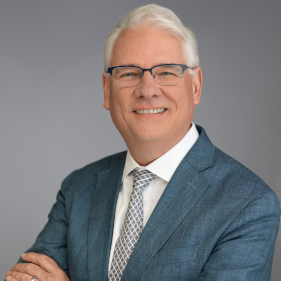
Kevin Marvel
Kevin B. Marvel, PhD, is SfN’s new Executive Director, effective March 16. Marvel brings more than 25 years of leadership experience in the scientific society sector, including 19 years as chief executive officer of the American Astronomical Society (AAS). Under his leadership, AAS achieved sustained financial strength, expanded membership, transitioned its journals to open access, and acquired Sky & Telescope, broadening the Association’s reach and impact. Below, Kevin talks to NQ about his background and some of his goals for SfN.
Neuroscience Quarterly (NQ): You’re an astronomer by training. What led you to study the stars?
Kevin Marvel (KM): On my 11th birthday, my mom got me a small telescope. We lived in Fort Worth, Texas, at the time, and I took it outside when it was still twilight. The sky was completely cloud free and a beautiful ink blue. The quarter-phase moon was out so, obviously, I pointed my brand-new telescope at the moon. Then I noticed midway between the Moon and where the Sun had set a very bright star, or at least what I thought was a star. I pointed the telescope at the star, and it was something that also had a phase. It ended up being the planet Venus. It tremendously excited me, and from that point on I focused on studying astronomy.
NQ: Rather than go into academia, government, or the private sector, you chose a less common path — to begin your professional career with the American Astronomical Society (AAS), your professional society. How did you discover that career option, and why did you think the policy-focused job you accepted was the right path for you?
KM: As my postdoc was winding down, my advisor, Anneila Sargent, a well-known radio astronomer, told me, “Oh, Kevin, you're not meant to do research. You should go to Washington, D.C., and do science policy.” It wasn’t because I was a bad researcher (I hope!). She felt I had skills that could be more impactful for astronomy.
After many conversations with folks already in the non-profit space, I took my advisor’s advice. I got the public policy position at AAS. In 2006, my boss, the AAS executive officer, announced his retirement. I realized he had subtly trained me for his role by rotating me through responsibilities across the organization — publishing, meetings, and program oversight. I became a strong candidate and got the job, serving through fall 2025.
NQ: What attracted you to the executive director role at SfN?
KM: I derive huge satisfaction from helping scientific organizations succeed. But I wanted a bigger challenge. AAS is medium sized; there were only a handful of larger organizations I would consider. SfN was one. Partly because I’ve known Marty [SfN’s previous executive director] and admired what he accomplished, and partly because SfN plays the same kind of central role in neuroscience that AAS plays in astronomy.
NQ: As two non-profit societies serving scientific disciplines, there are a lot of similarities between AAS and SfN. Let’s spend the next few questions exploring those similarities and differences as you see them.
You had the opportunity to attend Neuroscience 2025. SfN’s annual meeting is one of the largest annual scientific conferences in the world. What has stuck with you since November?
KM: The vibe, the pulse that you get walking on the poster floor. Past President Marina Picciotto identified several presenters that she thought I might enjoy meeting and talking to, and we walked the poster floor for about an hour and a half. The sense of excitement from these folks — some of them early career, some senior people — in presenting their research was inspiring. At AAS, the biggest annual meeting is about 3,700, which is less than the number of graduate students that attend SfN.
NQ: AAS has a rich offering of publications, and SfN plays an important role as a society publisher. How do you see society publishing evolving?
“SfN makes decisions through its Publications Committee and SfN Council from the point of view of supporting the discipline and not about making money. To me, that’s fundamental.”
KM: A lot has changed in academic publishing, but one thing has remained constant — the fact that scholarly societies play a fundamental role in supporting their disciplines. SfN makes decisions through its Publications Committee and SfN Council from the point of view of supporting the discipline and not about making money. To me, that’s fundamental.
To compare and contrast just a bit, this year AAS is on track to publish 9,000 manuscripts across its journals, which is roughly nine times larger than the total volume of articles published by SfN. So, I’m coming from a larger publishing enterprise than SfN has.
I think there are lots of opportunities for SfN to enhance the role that its journals play for the discipline. I’ll be working with the editors‑in‑chief and the Publications Committee to explore what that might look like.
NQ: Scientific societies have numerous ways to educate their members on the latest science, build communities, and recognize excellence. How do these responsibilities fit into your larger perspective of how scientific societies support their membership?
KM: Anyone who’s doing neuroscience research is someone that SfN needs to try and assist or recognize. For example, SfN just hosted a webinar on data visualization using MATLAB. I attended even though it was before I officially started the job to get a feel for the Society. I thought it was great because who else is going to provide that service? These kinds of webinars, that help people across the career spectrum be better at their work and enable them to do better research, are exactly what SfN should be doing.
NQ: During your time as chief executive officer of AAS, you facilitated the acquisition of Sky & Telescope, a magazine that “covers all aspects of the science and hobby of astronomy.” How did that acquisition influence your perception of public outreach?
KM: Most of the science that is undertaken in the U.S. is funded by taxpayers. Finding vehicles to communicate the results of that investment back to the public is central to being a scientific society and central to being a scientist. When AAS acquired Sky & Telescope, it enhanced the way the Association could bring astronomy to the public.
BrainFacts is already established. The BrainFacts team keeps it fresh with new, engaging, and scientifically rigorous content. It’s a relatively unique vehicle for delivering science to the public that not every scientific society is willing to invest in.
NQ: The need for effective advocacy efforts has been made abundantly clear over the past year. During your first week on the job, you participated in SfN’s Hill Days, meeting with lawmakers and their staff to discuss the importance of funding neuroscience research. What is one key advocacy activity you think is important for scientists to be doing?
KM: I think anyone who is undertaking scientific research should be finding a way to communicate with non‑scientists. Full stop. If you’re on an airplane going to a conference and sit down next to somebody, and if you strike up a conversation and it feels comfortable, you should tell them what you do and why it’s important to the person sitting next to you.
“So that means the responsibility falls on us as scientists to do more, to meet the public and talk to them about the value of the research that neuroscientists do, and why that research and the investment it requires is important to the public and their lives...”
I guarantee you that most citizens have not interacted with a scientist considering there are only a few million researchers compared to 340 million Americans. It’s relatively rare to bump into and talk to a scientist. So that means the responsibility falls on us as scientists to do more, to meet the public and talk to them about the value of the research that neuroscientists do, and why that research and the investment it requires is important to the public and their lives.
NQ: Let’s shift toward the immediate future here at SfN.
Coming into this role, what issues do you see as pivotal to the neuroscience field?
KM: I think it’s really important for us to interact with policymakers so they understand the fundamental need for the ethical use of animals in research. So much progress has been made using animals to understand and treat both animal and human diseases. I think that’s fundamental.
At the level of science broadly, defending government funding is going to be important. And I’ll also say this: SfN can’t just focus on the U.S. The Society has to find ways to support advocacy in other countries. That’s a subject I will be learning more about and exploring future opportunities to support our international members.
NQ: AI has the potential to change almost every aspect of our personal and organizational workflows. What are your general thoughts about AI and what role do you see AI playing in improving SfN’s service to its members?
KM: AI is here. It’s being used actively by SfN members and staff. I view it as a person‑enhancement engine. Individuals in any role, doing anything for themselves or the Society, can have their impact and their efficiency amplified by finding the right way to use AI for the right tasks. We need to make sure we’re putting the Society’s efforts into the projects that will have the greatest impact.
We also need to make sure it’s safe and learn how to check it. I did a query to try and figure out how many articles were being published or had been published in JNeurosci, and it gave me data starting in 1975, which was interesting because the journal didn’t start publishing until 1981!
At AAS, staff worked with a consultant to develop a way to sort abstracts more efficiently. That may be something we could do here at SfN.
NQ: Finally, what’s it been like to transition from astronomy jargon to neuroscience jargon?
“I know how to work for passionate scientists and to help them achieve more through the role of leading a scientific society.”
KM: The jargon is substantially different. The words and knowledge that I need to talk about galaxy collisions are completely opposite to what I need to talk about the impact of Alzheimer’s Disease.
But, passionate scientists demonstrate the same energy and excitement no matter the discipline. And I know how to work for passionate scientists and to help them achieve more through the role of leading a scientific society.
That gives me great confidence that the next few years are going to be successful, because what I’ve learned to do at AAS directly transfers to SfN.