Future of Neuroscience: Said Salehe
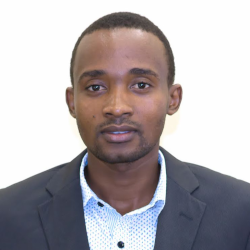
Said Salehe
“Future of Neuroscience” is a series of interviews with rising members of the field. A forward-looking complement to SfN’s “History of Neuroscience” autobiographies of distinguished researchers, interviewees reflect on their emerging careers and share thoughts on where they believe neuroscience is headed.
Said Salehe is a PhD candidate in the Brain, Behavior, and Environment (BBE) program at Florida International University. He works with Kim Tieu to investigate the benefits of Drp1 inhibition in aging and age-related disorders. He has published a number of papers and earned several awards, including the International Brain Research Organization (IBRO) neuroscience training grant and SfN Trainee Professional Development Award (TPDA). Brought up in the challenging tropical setting of rural northern Tanzania, his path to neuroscience has been a story of greater personal growth. By channeling personal adversity into motivation for community advancement, Said has developed an aspiring vision for neuroscience research in Africa.
Neuroscience Quarterly (NQ): You're pursuing a PhD in public health with a concentration in brain, behavior, and environment from Florida International University. What led you to pursue this career path?
Said Salehe (SS): I grew up in Same district, part of the Kilimanjaro region in northern Tanzania. It is a rural area categorized as “malaria endemic,” meaning there is disease transmission throughout the year. I frequently was sick with malaria, and I was eager to find ways to improve the health of my community.
I did my undergraduate training in environmental health science at Muhimbili University of Health and Allied Sciences and worked at a district health council in northwestern Tanzania. There, I oversaw public health initiatives like insecticide-treated mosquito net distribution, indoor insecticide spraying for malaria prevention, vaccination programs, and educational outreach. Through this experience, I started to appreciate the complex role of the environment — microbial, chemical, and psychosocial — in health and well-being.
I have become particularly interested in the connection between the environment and brain health. Many people in my community developed cerebral malaria, which is associated with neurological complications. To make matters worse, the drugs meant to treat malaria and the insecticides meant to prevent it came with their own set of neurological side effects.
I soon realized that to make a more meaningful impact, I needed advanced training to understand the connection between environmental agents, exposures, and chronic diseases — in particular brain disorders. I went on to pursue a master's in environmental health toxicology from Florida International University under the Fulbright Foreign Student Scholarship. Through this master's training, I discovered my current PhD program on Brain, Behavior, and Environment, which encompasses everything I have been working on and plan to do in the future.
“I soon realized that to make a more meaningful impact, I needed advanced training to understand the connection between environmental agents, exposures, and chronic diseases — in particular brain disorders.&rdquo
NQ: What is your current area of research and what drew you to it?
SS: The lab I joined for my graduate training investigates therapies that could stop the development or progression of Parkinson's disease rather than just treat the symptoms. My specific interest lies in studying aging as it relates to this progression. According to the current epidemiological prediction, Africa will have the largest aging population in the world and become the leading contributor of neurodegenerative disorders by 2050. With age, different changes predispose us to Parkinson’s and many other neurological disorders. We also know that environmental exposure to things like insecticides or heavy metals increases our risk.
We are working out how, mechanistically, exposure to environmental toxicants leads to disease, and what changes in normal aging increase disease risk.
We published a paper last year describing how manganese, a heavy metal, impairs autophagy, the cellular process of clearing out damaged cell parts, and how inhibiting a protein called Drp1 is neuroprotective. So, we’re figuring out how this environmental toxicant can cause cellular dysfunction, which will open the door for a potential intervention strategy.
NQ: How can collaboration between public health and neuroscience strengthen research outcomes?
SS: The public health lens takes the wide population perspective, but what do things look like on the individual level? The molecular level? That’s where neuroscience comes in.
Our lab investigates the nexus between neurotoxicants and genetic mutations in the development of neurodegenerative disorders like Parkinson's disease. One of the toxicants that we investigate that exemplifies the connection between public health and neuroscience is paraquat, an herbicide that is associated with an increased risk of Parkinson’s. The basis of this work started from a public health perspective.
“The public health lens takes the wide population perspective, but what do things look like on the individual level? The molecular level? That’s where neuroscience comes in.”
In the 1980s, a number of heroin users in California were presenting with Parkinson’s-like symptoms of unknown origin. After investigating further, it was discovered that the drug they had injected contained a chemical called MPTP, a neurotoxin that induces Parkinson’s disease. This was when researchers started to realize that Parkinson’s could develop through chemical exposure. After that landmark publication, researchers started a search for chemicals with similar structures to MPP+ (the active metabolite of MPTP). It was soon discovered that paraquat shared a similar chemical structure to MPP+, suggesting a similar mechanism of action. Meanwhile, epidemiological studies were showing that people exposed to paraquat were more likely to develop Parkinson’s than those who were not exposed.
The discovery of MPP+ as the culprit galvanized the neuroscience community to investigate this agrochemical. Scientists confirmed that paraquat causes vulnerability and cell loss associated with Parkinson’s, largely through oxidative stress. This work informed public health policy that restricted paraquat use in the U.S. and other countries.
This is just one example of how these fields work in tandem to investigate complex scientific questions — it moved from a clinical problem to public health research to molecular neuroscience and later to public health policy.
NQ: What are some of your long-term career goals? How can the field of neuroscience change to improve global health?
SS: My ultimate goal is to start a lab in my home country — not just for me, but to create opportunities for talented researchers who wouldn’t normally have access to neuroscience research. I plan to eventually expand into a full center for research into age-related neurological disorders equipped with facilities to do both public health work, molecular neuroscience, and translational science. It is particularly important to establish a center like this in Africa to support the expanding needs of the aging population, but also to study different populations outside of just Europe and the U.S. I understand the road to get there will be complicated. Africa relies heavily on funding from NIH and other U.S. institutions, and with so much uncertainty around funding, critical foundational research is at risk. If I manage to secure funding for research in Tanzania it will be a great starting point. However, the lack of access to proper lab equipment and infrastructure makes it difficult to conduct certain types of research, especially molecular research. I know I’ve chosen a difficult path, but it’s the right one for me now and in the future.