Message From the President: An Optimistic View
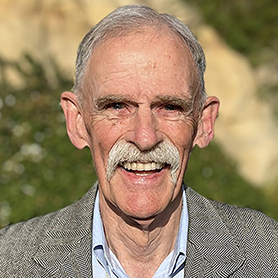
Nick Spitzer
My engagement with SfN began at Neuroscience 1973, which was held at the Town and Country Hotel in San Diego, just down the road from the University of California San Diego (UCSD) where I had started my lab the year before. I knew immediately: these were my people. Back then, the annual meeting was small enough so that there were no simultaneous sessions. A real sense of community was built during the meeting as attendees listened, presented, ate, and talked together. It was the beginning of a lifelong commitment to a Society that has done so much for my career and field.
I’ve had the privilege of serving SfN in many capacities including on the Program Committee, the Public Education and Communication Committee (PECC), Council, as founding Editor-in-Chief of BrainFacts, and now as president. While I’ve volunteered with my university and funding agencies, my time on behalf of SfN has been my most significant volunteer commitment.
Of all my contributions, helping launch the BrainFacts website in 2012 remains one of my proudest accomplishments. Our goal was to build off the Brain Facts book — a 79-page primer designed to support classroom learning — and reach a much broader online audience with stories of mystery and discovery that define neuroscience. We believed, and still do, that sharing the wonder of neuroscience with the world seeds public support for research and funding.
“We believed, and still do, that sharing the wonder of neuroscience with the world seeds public support for research and funding.”
Which brings me to the challenges we face today. I have witnessed neuroscience evolve and SfN evolve with it. Yet over decades, one constant was the broad support for scientific research across branches of government. Budgets fluctuated, but the value of our enterprise was rarely questioned. Until recently.
The current administration’s actions in 2025 — revoking grants, punishing universities, dismantling diversity efforts, and proposing cuts of 40% for NIH and more than 55% for NSF — have been deeply damaging to the research and careers of many, particularly for those just beginning. These actions and policies have demoralized even those not directly affected by them.
“After a fortifying Neuroscience 2025 and restorative holiday hiking, I am ready to face the inevitable challenges 2026 will bring.”
But now, I am beginning to see reasons for optimism. We are seeing pushback from Congress and the courts. Attempts to slash facilities and administrative costs have been rebuffed for now, and Congress has rejected the proposed catastrophic cuts to research funding in favor of more sustainable budgets. I believe our community’s bipartisan support in Washington, D.C., coupled with the American public’s appreciation for science, will see us through this storm.
SfN will continue to advocate vigorously for its members, communicating our needs to policymakers and sharing the value of neuroscience with the public. After a fortifying Neuroscience 2025 and restorative holiday hiking, I am ready to face the inevitable challenges 2026 will bring. And I look forward to reflecting on those challenges with you at Neuroscience 2026.