Advocacy Network News
Sign up for the monthly Advocacy Network News to receive the latest science policy developments, advocacy engagement opportunities, and advance advocacy resources right to your inbox.
November 2026
SPOTLIGHT
Mark your calendars for exciting advocacy events during Neuroscience 2026 in Washington, D.C., November 14–18.
Explore the Early Career Poster Session to check out the advocacy work completed by 2026 Early Career Policy Ambassadors (ECPAs). WCC Halls A–C, November 14, 6:45–8:45 p.m.
Attend the Career Development Topics: A Networking Event to hear from experienced neuroscientists on work-life balance, navigating the PhD process, funding opportunities, job application strategies for postdoctoral positions, and careers outside academia, including science policy. WCC Hall A, November 14, 8–9:30 p.m.
Learn more about careers in neuroscience at the Career Information and Skills Fair. Hear from neuroscientists in different careers, including those in government and science communication. WCC Hall A, November 15, 3:30–5 p.m.
Attend the Animals in Research Panel to hear experts discuss current New Approach Methodologies (NAMs) techniques, how NAMs can complement animal model use, and best practices for integrating NAMs into ongoing research programs. This session is supported by the National Primate Research Consortium. WCC Room 206, November 16, 10–11:30 a.m.
The Advocacy Forum: A Congressional Neuroscience Caucus Briefing offers the opportunity to hear from panelists on the latest breakthroughs in gene therapies for treating neurological developmental disorders and the role of policymakers and advocacy in continuing progress. Rayburn House Office Building Room 2168, November 17, 1–2:30 p.m. RSVP here
Interested in meeting with congressional offices while you’re in Washington, D.C.? Complete this form so our team can share key talking points and help you prepare. Indicate Your Interest
SfN ADVOCACY
SfN and Coalition Partners Continue Robust Advocacy Response. Check out the Advocacy Response Center for the latest from SfN and coalition partners, including a recent statement of concern regarding the Department of Homeland Security’s proposed changes to duration of status.
Early Career Policy Ambassadors Program applications open November 9, 2026–January 4, 2027! Undergraduate, postbaccalaureate, and graduate students, as well as recent PhD/MD recipients, are encouraged to apply to this 10-month program. The ECPA Program offers early career scientists the opportunity to enhance their advocacy skills with the neuroscience community, policymakers, and the public. Early Career Policy Ambassadors Program

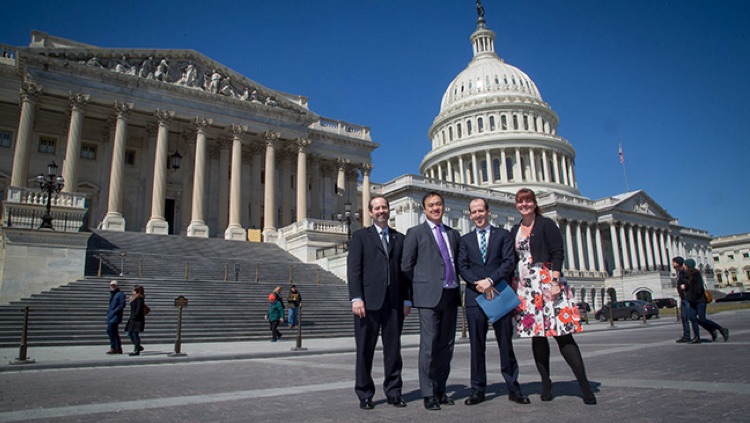
ECPAs at the 2025 annual meeting. From left to right: Nicole D’Souza, Alex Rich, Blakely Lockhart, and Joe Hennessey.
ACROSS THE FIELD
Apply to Research!America’s Civic Science Microgrants and Awards Program, designed to empower early career researchers with the tools needed to engage their communities in two-way dialogue about timely science and research issues. Applications close November 20. The Research!America Civic Science Microgrants and Awards Program
The Scientist Network for Advancing Policy (SNAP) launched SciPol 101, a free, open-access curriculum designed to educate and empower scientists to engage in science policy and advocacy. SciPol 101 Course
SfN co-sponsored a Congressional Neuroscience Caucus (CNC) briefing, "Psychedelics in Brain Health: From Promise to Practice” where panelists discussed both the therapeutic potential and the practical challenges of translating psychedelic research into safe, evidence-based treatments that improve outcomes for individuals living with brain disorders and mental health conditions. Psychedelics in Brain Health: From Promise to Practice
STAY UP TO DATE WITH SfN
The #SfN26 Neuroscience Meeting Planner is now available. Head to SfN.org/nmp to browse Neuroscience 2026 sessions, presentations, authors, curated itineraries, and more. Neuroscience Meeting Planner
Thursday, November 5: #SfN26 registrants can access the virtual component.
Friday, November 13, 1–5:30 p.m. EST: Register for the Responsible Conduct of Research Short Course — From Algorithms to Accountability: Responsible Use of AI in Neuroscience.
Saturday, November 14–Wednesday, November 18: Neuroscience 2026 in Washington, D.C.
January 2027: Applications open for the Neuroscience Scholars Program, a two-year online training program to support graduate students and postdoctoral researchers through mentorship, career development resources, and a supportive network dedicated to your success.
Past Issues
To have the newsletter delivered to your inbox each month, sign in to your member account and opt in to the Advocacy Network.
Join the Advocacy Network
Stay informed and take action on issues that affect your research