Q&A: Meghan Riley, CRD Associates

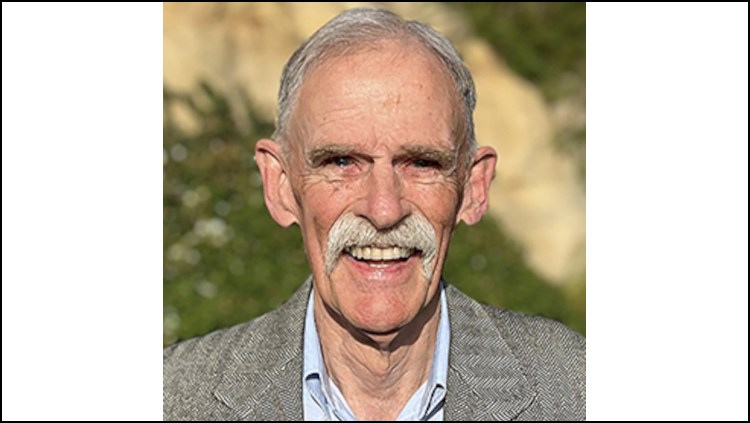
Meghan Riley
Meghan (Meg) Riley is an experienced government affairs professional with nearly two decades of experience working with grassroots and patient advocacy organizations to influence the federal legislative and appropriations processes. She plans and executes strategies that advance the federal legislative goals of organizations focused on public health, biomedical research, laboratory issues, and other health fields. Prior to joining CRD Associates, Riley was vice president of federal government affairs at the American Diabetes Association (ADA), leading ADA’s efforts on Capitol Hill to advance policies for people with and at risk for diabetes. Riley helped lead successful advocacy campaigns to establish the National Diabetes Prevention Program and later the Medicare Diabetes Prevention Program, the first community-based disease prevention program to be made eligible for Medicare reimbursement.
Neuroscience Quarterly (NQ): CRD Associates is not an organization you hear about in the news. What is the firm’s history and role within Washington, D.C.?
Meghan Riley (MR): CRD Associates is a government relations firm in Washington, D.C., with more than 40 years of history helping organizations, including SfN, achieve their policy goals. Many of our clients are nonprofit organizations in the health and biomedical research space that seek our support to advance the federal investment in scientific research. Through changing presidential administrations and Congresses controlled by both Republicans and Democrats, we help organizations develop strategies to influence legislators and other officials to make positive changes in policy and to invest in programs that will benefit their communities — including research institutions, scientists, and the public.
NQ: While some science policy changes make the news, many more do not. What signals coming out of Capitol Hill and the executive branch does CRD Associates monitor and respond to?
MR: CRD Associates is on the ground on Capitol Hill and across Washington, D.C., monitoring both the big-picture policy environment and the smaller efforts that can impact the federal research enterprise. On Capitol Hill, that includes legislation and the appropriations process, which both require following committee hearings and markups, tracking statements from members of Congress, and holding our own conversations with staff on Capitol Hill. Within the executive branch, we pay close attention to agency actions, proposed rules and guidance, budget proposals, and other administrative changes that could affect the research community. Each of these areas could reveal emerging areas of bipartisan interest and opportunity as well as potentially harmful policy proposals that the organizations we work with will have to respond to. We help identify those issues early and provide strategic recommendations on whether, when, and how an organization should engage.
NQ: Can you describe some of the major components common to any successful influence initiative in Washington, D.C.?
MR: It takes a focused and often long-term approach to see even the incremental policy changes that can benefit an organization and its members. Successful advocacy starts with clear, achievable goals and a strategy that recognizes who has the ability to move those goals forward. From there, relationship building is essential. Policymakers and their staff need to know who you are, understand the community you represent, and view you as a credible resource. Moreover, the tides can always turn in Washington, D.C. For a scientific organization like SfN, it is essential to implement a strategy that emphasizes the nonpartisan, scientific nature of the work and seeks to build relationships on both sides of the aisle.
Successful advocacy starts with clear, achievable goals and a strategy that recognizes who has the ability to move those goals forward. From there, relationship building is essential.
Coalition building, grassroots engagement, and strategic communications can all strengthen that work. There is rarely a single meeting or action that produces a policy outcome. More often, success comes from reinforcing a consistent message through multiple channels, leveraging the strength of like-minded organizations through coalitions, building relationships over time, and being ready to act when an opportunity emerges. For organizations like SfN, engaging members through grassroots action is an essential component. Legislators want to hear how the policies they vote on will impact their own constituents.
NQ: SfN’s advocacy actions are varied, including examples such as its response to the Office of Management and Budget’s (OMB’s) proposed rule on grantmaking and Capitol Hill Days. What roles does CRD Associates play in shaping SfN’s advocacy actions?
MR: Our role is not only to help SfN analyze the expected impact of proposals like the OMB’s Proposed Rule on Federal Financial Assistance, but also to help SfN translate that to its membership and leverage the expertise of its members into an effective response. No matter how big or small the proposal, we provide support that includes monitoring the policy landscape, identifying opportunities or potential challenges, providing strategic advice, and helping determine when and how SfN can have the greatest impact.
We also help connect SfN and its members directly with policymakers to help build the relationships that are necessary for a successful advocacy program. Capitol Hill Day is a good example: scientists themselves are the most compelling advocates for neuroscience. We work closely with SfN to ensure its leadership and members have opportunities to meet with legislators and their staff and are properly prepared to make the case for investment in neuroscience, including at NIH.
NQ: CRD Associates represents numerous scientific societies. How do you approach balancing what is best for a single client/society vs. what is best for the larger scientific community?
MR: CRD Associates does not offer a one-size-fits-all approach; rather, we work with organizations like SfN to craft a strategy that works best for the Society and its members. That said, the scientific advocacy community as a whole is strongly united in its quest for federal investment in biomedical research. SfN is a strong partner in several coalitions calling for this investment. We work with SfN to determine how the organization can amplify the advocacy of the overall community while highlighting the unique importance of neuroscience.
At the same time, there are issues within research advocacy where SfN plays a leadership role. These include advocating for the ethical and responsible use of animals in research. We provide strategic advice to the organization on how to lead in educating Congress and the administration about the continued importance of animals to scientific research, and specifically to neuroscience. In those areas, it is our goal to help SfN use its scientific expertise and the voice of its members to lead the conversation.