



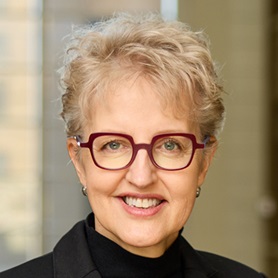
Linda J. Richards, PhD
Administrative Accomplishments
I have held executive leadership positions in both Australia and the United States. In Australia I was appointed as the Deputy Director (Research) of the Queensland Brain Institute at the University of Queensland. In this role I oversaw all Institute infrastructure facilities, oversaw the grants office, chaired the research committee, mentored faculty and promoted the Institute to community groups and philanthropic individuals and organizations. My current role as Chair of the Department of Neuroscience at Washington University in St Louis involves setting the direction of our research and education missions, managing the delivery of those missions, oversight of the department budget and financial resources, hiring faculty and staff, and fund raising. I am a member of the Washington University School of Medicine Executive Faculty, with direct input into executing the missions and functions of the medical school. I am also Director of the McDonnell Center for Cellular and Molecular Neurobiology, where I manage an endowment that provides internal grants, travel awards, fellowships and recruitment packages for the WashU Neuroscience community.
I served as President of the Australasian Neuroscience Society (ANS) from 2017 to 2018. During my presidency, ANS Council undertook a membership survey to inform the society's direction and used this to develop ANS's first ever strategic plan, setting out a five-year vision for the society. Among the structural changes introduced as a result of this were a new Equity and Diversity Committee to embed inclusiveness across all society activities, an Animals in Research Committee, Student and Postdoc Committees to represent early-career researchers on ANS Council, a Teaching Resources Committee and a Sponsorship working group to support conference planning. We launched the Elspeth McLachlan Plenary Lecture, named in honor of the first female president of ANS. We also commissioned a redesign of the ANS logo, introduced a three-year membership option to improve member retention, and broadened the society's reach across basic scientists, cognitive and computational neuroscientists, clinicians, engineers, and educators. These initiatives collectively modernized the governance and strategic direction of the society and strengthened its profile as the peak body for neuroscience in Australasia.
From 2015 to 2021, I played a central administrative and leadership role in the International Brain Initiative (IBI) and the Australian Brain Alliance (ABA). I was a founding member of the ABA in 2015 and served as its Chair or Co-Chair from 2016 to 2020, during which the alliance grew from six founding organizations to more than 30 member bodies. I represented the ABA internationally at the Coordinating Global Brain Projects Meeting at Rockefeller University, the GE Kavli Brain Trust VI in San Diego, and the IBI planning meeting at the UN Secretariat in New York, and co-authored the ABA's vision in a special issue of Neuron. In parallel, I was present at the IBI's foundation and organized and hosted the 2017 "Brains at the Dome" workshop in Canberra, where the Canberra Declaration formally established the IBI. From 2018 onward, I served on the IBI Coordinating Body, attending meetings in Korea, Geneva, San Diego, and Shanghai. I was Master of Ceremonies at the IBI's 2018 launch, chaired a panel at the OECD Workshop on responsible neurotechnology in Shanghai, and represented the IBI at the LATBrain Initiative Meeting in Montevideo. I also contributed to governance through the IBI Strategy Committee and presented at the FENS Forum on facilitating global neuroscience engagement. Finally, I co-developed and launched the Australian Brain Initiative: Strategic Business Case at Parliament House in Canberra in October 2019, which made the formal case for Australian government investment in a national brain research initiative and represented the culmination of five years of strategic advocacy, coalition-building, and international engagement.
Current Position(s) at Your Current Institution
- From 01/2021. Edison Professor of Neuroscience and Chair, Department of Neuroscience, Washington University School of Medicine, St Louis
- From 01/2021. Director, McDonnell Center for Cellular and Molecular Neurobiology, Washington University School of Medicine, St Louis
Degree, Institute, Year Earned
| Degree | Institute | Year Earned |
| PhD | The University of Melbourne | 1994 |
| BSc (Hons) | The University of Melbourne | 1990 |
| BSc | Monash University | 1988 |
Research Areas
My research investigates brain circuit development, axonal and glial development, cortical activity patterns, and cortical malformations, particularly Corpus Callosum Dysgenesis (CCD). My laboratory works across animal models and with human research participants and their families. I combine genetics and molecular/developmental biology with advanced imaging, circuit analysis, behavior, and human cognitive neuroscience to understand relationships between brain structure and function.
Memberships & Service
| Organization | Position Held | Year(s) |
| Cajal Club Foundation, USA | Board Member | 2025–present; 2017–2019 |
| International Brain Laboratory | Scientific Advisory Board Member | 2021–2025 |
| SfN – International Brain Bee Representative | Member | 2019–2022 |
| SfN – Gruber International Award Selection Committee | Member | 2019–2021 |
| The International Human Frontier Science Program Organization Council of Scientists | Member | 2019–2020 |
| Australian Government’s Million Minds Mission Advisory Panel | Member | 2018–2020 |
| Australian Brain Alliance (Australian Academy of Science) | Co-Chair | 2018–2020, 2016–2017 |
| Australian Brain Alliance (Australian Academy of Science) | Chair | 2017–2018 |
| Australian Brain Alliance (Australian Academy of Science) | Member | 2015 |
| International Brain Initiative Initial Strategy Committee | Australian Representative, Spokesperson, and Member | 2017–2020 |
| Sylvia and Charles Viertel Charitable Foundation Medical Advisory Board | Member | 2016–2021 |
| Australasian Neuroscience Society | President Elect, President, Past President | 2016–2019 |
| Society for Neuroscience (SfN) | Member | 1995–present |
Service Positions
Editorial Boards:
| Publication | Position Held | Year(s) |
| Neuroscience Research | Associate Editor, Development/Repair Neuroscience | 2019–present |
| Brain and Neuroscience Advances | Senior Editor, Molecular and Developmental Neuroscience | 2016–present |
| Journal of Comparative Neurology | Member, Editorial Board | 2016–present |
Other Service Positions:
| Organization | Position Held | Year(s) |
| US National Organization for Disorders of the Corpus Callosum | Board Member and Scientific Advisor | 2026 |
| NIH, NINDS Fundamental Neuroscience Working Group | Member | 2023 |
| Australian Academy of Science Sectional 7 Committee | Member | 2018–2020 |
| Australian Disorders of the Corpus Callosum (AusDoCC) | Patron and Chief Scientific Advisor | 2017–present |
Science Biography
I completed my PhD at the Walter and Eliza Hall Institute of Medical Research and the University of Melbourne, Australia, before moving to the United States in 1994 to pursue postdoctoral studies as a Lucille P. Markey Scholar at the Salk Institute for Biological Studies in San Diego. In 1997 I was appointed as a tenure-track Assistant Professor in the Department of Anatomy and Neurobiology at the University of Maryland School of Medicine in Baltimore, where I was promoted to Associate Professor with tenure in 2002. In 2005 I returned to Australia to join the newly established Queensland Brain Institute at the University of Queensland. I was promoted to Professor in 2010 and served as Deputy Director (Research) from 2015 to 2020. In 2021 I moved to Washington University in St. Louis, where I am currently Chair of the Department of Neuroscience and Director of the McDonnell Center for Cellular and Molecular Neurobiology. I was elected a Fellow of the Australian Academy of Science in 2015 and the Australian Academy of Health and Medical Sciences in 2016 and appointed an Officer of the Order of Australia in 2019.
The defining goal of my research has been to understand how the brain becomes wired during development, and to translate that understanding into insights into human brain disorders. My research program spans developmental neurobiology, neuroimaging and systems neuroscience — united by a single question: how do millions of axons form functional interhemispheric circuits that underpin cognition and behavior? Our focus is the development and function of the corpus callosum, the largest axon tract in the mammalian brain. Over nearly three decades my laboratory has uncovered the roles of various axon guidance molecules and their receptors in callosal formation. We have investigated the role of midline cellular populations — the glial wedge, indusium griseum glia, midline zipper glia and glial sling — in callosal formation, and the function of the Nuclear Factor I (NFI) transcription factors that coordinate neuronal and astroglial differentiation essential for cortical development.
Astroglial-mediated remodeling of the interhemispheric fissure is essential for corpus callosum formation as deficits cause corpus callosum dysgenesis (CCD). CCD affects approximately 1 in 4,000 people and is one of the most common congenital brain malformations. Working directly with individuals with CCD and their families, our research collaborations have shown that CCD disrupts higher cognitive functions including abstract reasoning, metacognition, social inference, persuadability, and language.
To investigate activity-dependent mechanisms of early cortical wiring, my laboratory established a colony of Australian fat-tailed dunnart marsupials, initially at UQ and then at WashU. Dunnart joeys are born at a stage equivalent to a 7-week human gestation fetus, providing real-time access to the developing cortex as it first generates patterned neural activity and assembles its long-range projections. We are currently investigating how cortical arealization and circuit formation occurs in this mammal.
Beyond the laboratory, I am committed to translating discoveries into public benefit and to advocating at the highest levels for sustained investment in neuroscience.
The full CV for this candidate can be found within the ballot.






