



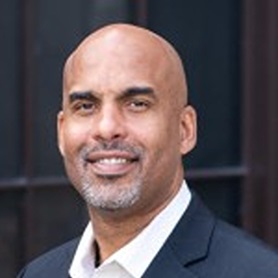
Damien A. Fair, PA-C, PhD
Administrative Accomplishments
I hold several major leadership roles spanning institutional, national, and international efforts. I serve as Redleaf Endowed Director of the Masonic Institute for the Developing Brain at the University of Minnesota, overseeing a 125,000 sq ft interdisciplinary institute with 500+ faculty, staff, and trainees, and leading strategy, recruitment, program development, and cross-departmental integration. I am also Principal Investigator of the NIH-funded Healthy Brain and Child Development (HBCD) Data Coordinating Center, a 29-site national consortium requiring large-scale coordination, data harmonization, and infrastructure for data sharing and reproducible science. Additionally, I am a Multiple PI on the University of Minnesota Clinical and Translational Science Institute (CTSI), where I help guide translational research strategy, infrastructure development, and interdisciplinary collaboration. Last, I have extensive experience leading and managing several complex, multi-site research and public health programs. This includes a Department of Defense funded appropriation expanding access to behavioral health care via telehealth, coordinating multi-institutional teams, military, and rural organizations to address public health challenges for families with children with mental health needs. These efforts have required building and leading large, diverse teams, aligning stakeholders across academia, healthcare systems, government, and community partners, and delivering complex programs at scale, efforts that directly prepare me for similar roles within SfN.
Current Position(s) at Your Current Institution
- Redleaf Endowed Director, Masonic Institute for the Developing Brain
- Professor, Institute of Child Development, College of Education and Human Development
- Professor, Department of Pediatrics, Medical School
- University of Minnesota
Degree, Institute, Year Earned
| Degree | Institute | Year Earned |
| Ph.D. in Neuroscience | Washington University School of Medicine | 2008 |
| Master of Medical Science | Yale University School of Medicine | 2001 |
| Bachelor of Science (Biology, Minor: Chemistry) | Augustana College | 1998 |
Research Areas
- Developmental cognitive neuroscience and brain network organization across the lifespan
- Functional MRI and precision functional mapping (resting-state and task-based connectivity)
- Neurodevelopmental and neuropsychiatric disorders (e.g., ADHD, autism, substance use, mood disorders)
- Large-scale, multi-site cohort studies and big data science (ABCD, HBCD)
- Translational neuroimaging, reproducibility, and open science
- Technology-enabled care and access (telehealth, data platforms)
Memberships & Service
| Organization | Position Held | Year(s) |
| SfN – Public Education & Communication Committee | Incoming Chair, Chairperson | 2021–2025 |
| SfN – Public Education & Communication Committee | Member | 2013–2016 |
| Flux: The International Congress for Integrative Developmental Cognitive Neuroscience | President | 2021–2024 |
| Flux: The International Congress for Integrative Developmental Cognitive Neuroscience | Board (Treasurer) | 2018–2021 |
| Flux: The International Congress for Integrative Developmental Cognitive Neuroscience | Program Chair | 2015–2016 |
| Flux: The International Congress for Integrative Developmental Cognitive Neuroscience | Organizing Committee | 2013–2014 |
| Biological Psychiatry Program Committee | Member | 2018–2023 |
| SfN – Program Committee | Member | 2018–2022 |
| SfN – NGA/SEA Selection Committee | Member | 2017–2020 |
| SfN – Workforce and Training Working Group | Member | 2014–2015 |
| Society for Neuroscience (SfN) | Member | 2004–present |
Service Positions
Editorial Boards:
| Publication | Position Held | Year(s) |
| SfN – Brainfacts.Org | Editorial Board | |
| Biological Psychiatry: Global Open Science | Editorial Board | |
| Network Neuroscience | Editorial Board | |
| Neuroimage | Editorial Board |
Other Service Positions:
| Organization | Position Held | Year(s) |
| Northside Achievement Zone | Board of Directors | 2022–present |
| YMCA-North | Board Member | 2022–2025 |
| Augustana University | Board of Trustees | 2021–present |
| National Institute on Alcohol Abuse and Alcoholism (NIAAA) | Board of Scientific Counselors | 2021–2025 |
| National Institute of Child Health and Human Development (NICHD) | National Advisory Council | 2021–2025 |
| National Scientific Council on the Developing Child | Member | 2021–2025 |
| ABCD JEDI Council | Chair | 2021–2025 |
| Global Brain Consortium (GLAD) | Member | 2021–2024 |
| Child Mind Institute | Scientific Research Council | 2020–present |
| Turing Medical | Board of Directors | 2020–present |
Science Biography
Damien Fair is a Cognitive Neuroscientist and Professor in the Institute of Child Development and the Department of Pediatrics at the University of Minnesota. He is also the Redleaf Endowed Director of the Masonic Institute of the Developing Brain. He trained at Washington University in St. Louis under Bradley Schlaggar, M.D., Ph.D. and Steven Petersen, Ph.D. His postdoctoral work was conducted at Oregon Health and Science University under Joel Nigg, Ph.D. and Bonnie Nagel, Ph.D.
Combining technical advances in functional MRI, advanced mathematics, and expertise in psychology and neuroscience, Fair has demonstrated several basic principles of brain development and its relationships to typical and atypical behaviors. More recently, his work has helped establish the methodological foundations for reproducible brain-wide association studies at scale. He has also demonstrated how personalized precision functional mapping can be leveraged to identify novel translational targets for neuromodulation and therapeutic intervention in psychiatry, neurology, and developmental medicine. As PI and co-leader of the Adolescent Brain Cognitive Development (ABCD) Study and the Healthy Brain and Child Development (HBCD) Study, two of the largest brain-development studies in history, he directs transformative national efforts that define typical and atypical neurodevelopmental from the prenatal period through young adulthood. He has advanced reproducibility, open science, education and health accessibility by leading major NIH, DoD, and SfN efforts around big data, telehealth, tele-education, military/rural mental health care, and science communication. He has published more than 200 journal articles in high-impact journals including Nature, Cell, Nature Neuroscience, Molecular Psychiatry, Neuron, PNAS, Science, and others, with over 54,000 citations and an H-index exceeding 100.
In 2012, he was awarded the Presidential Early Career Award for Scientists and Engineers issued by President Barack Obama and the White House. In 2020, he was named a John D. and Catherine T. MacArthur Fellow. He recently served on the Board of Scientific Counselors for the National Institute on Alcohol Abuse and Alcoholism and Council for the National Institute of Child Health and Human Development. He also serves on the Scientific Research Council for the Child Mind Institute and the National Scientific Council on the Developing Child.
Fair is deeply committed to public service, community engagement, and STEM education. He founded and directed the OHSU Fellowship for Diversity and Inclusion and the Youth Engaged in Science (YES!) initiative, which has since expanded into BrainWaves, a statewide and national youth curriculum promoting brain health literacy and pathways into brain-related careers. He’s also served on the Society for Neuroscience Program Committee, Chaired Public Education and Communication Committee, Press Committee, Workforce and Training Groups, and maintained a position on the Brainfacts.Org Editorial Board. He is also a past President of the Flux Society. He has delivered briefings to the Congressional Neuroscience Caucus and the American Brain Coalition on the intersection of brain development and public policy. His work is driven by an integrative, equity-focused vision aimed at advancing the intersection of cognitive psychology and neuroscience while expanding access, opportunity, and impact across science and society.
The full CV for this candidate can be found within the ballot.






