
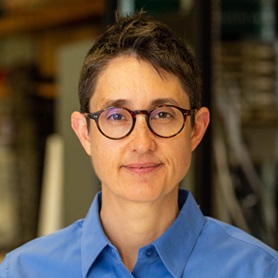
Catherine S. Woolley, PhD
Administrative Accomplishments
I have held several administrative positions that provided experience managing budgets (cost study, forecasting, reconciliation, reporting) and working collaboratively with staff. At Northwestern, I founded a research core facility and served as its Director for 13 years; I served as Director of an NIH T32 training program; I founded the undergraduate program in Neuroscience and served as its Director for six years; and I served for three years as Associate Dean for Research in Weinberg College of Arts & Sciences. For SfN, I served as a Councilor for four years (2014-18) and currently sit on the Finance Committee. Altogether, this background should serve me well in fulfilling the responsibilities of SfN Treasurer.
Current Position(s) at Your Current Institution
- William Deering Professor of Biological Sciences
Department of Neurobiology (primary)
Weinberg College of Arts & Sciences
Department of Neurology (secondary)
Feinberg School of Medicine
Northwestern University
Degree, Institute, Year Earned
| Degree | Institute | Year Earned |
| Ph.D., Neuroscience | Rockefeller University | 1993 |
| B.S., Zoology | Texas A&M University | 1987 |
Research Areas
- Neuromodulation
- Sex differences in the brain
- Seizures and epilepsy
- Neurobiology of stress
- Social drivers of health
Memberships & Service
| Organization | Position Held | Year(s) |
| SfN – Peter Seeburg Integrative Neuroscience Prize Selection Committee | Member | 2025-present |
| SfN – Finance Committee | Member | 2024-present |
| SfN – Editor in Chief Search Committee | Member | 2022 2015-2016 |
| American Academy of Arts & Sciences | Fellow | 2021-present |
| American Association for the Advancement of Science | Fellow | 2021-present |
| SfN – Julius Axelrod Prize Selection Committee | Member | 2020-2022 |
| National Academy of Medicine | Member | 2019-present |
| SfN – Strategic Investments Acquisition Working Group | Member | 2017-2021 |
| SfN – Council | Councilor | 2014-2018 |
| SfN – Workforce and Training Working Group | Chairperson | 2014-2015 |
| SBN – Advisory Board | Member | 2011-2018 2003-2007 |
| SBN – Program Committee | Chairperson Member |
2010 2009-2011 2005-2008 1998-2000 |
| SfN – Education Committee | Member | 2002-2005 |
| Society for Behavioral Neuroendocrinology (SBN) | Member | 1997-2025 |
| American Epilepsy Society | Member | 1994-2020 |
| Society for Neuroscience (SfN) | Member | 1989-present |
Service Positions
Editorial Boards:
| Publication | Position Held | Year(s) |
| Annual Review of Neuroscience | Editorial Committee | 2019-2024 |
| SfN – JNeurosci Editorial Board | Senior Editor Reviewing Editor Associate Editor |
2016-2022 2012-2016 2010-2012 |
| Hippocampus | Editorial Board | 2008-2020 |
Other Service Positions:
| Organization | Position Held | Year(s) |
| National Institute of Mental Health | Board of Scientific Councilors, Ad Hoc | 2020 |
| National Institute of Mental Health | BRAIN Initiative F32 Panel, Chair | 2018-2020 |
| National Institute of Mental Health | Pathway to Independence (K99/R00) Panel, Chair | 2015-2019 |
| National Institute of Mental Health | Institutional NRSA (T32), Review Panel | 2014 |
| National Institutes of Health | New Innovator (DP2), Reviewer | 2017-2019 |
| National Institutes of Health | BRAIN Initiative R01, Review Panel | 2014 |
| National Institutes of Health | Developmental Brain Disorders, Review Panel | 2014 |
| National Institutes of Health | Integrative and Functional Neurobiology, Review Panel | 2013 |
| National Institutes of Health | New Innovator (DP2), Reviewer | 2012 |
| National Institutes of Health | Neuroendo, Neuroimmuno, Rhythms and Sleep, Study Section Member | 2007-2011 |
| National Institutes of Health | Neuroendo, Neuroimmuno and Behavior Study Section, Ad Hoc | 2006 |
| National Institutes of Health | Male Hormones and Aging Special Emphasis Panel, Reviewer | 2005 |
| National Institutes of Health | Neurodegeneration and the Biology of Glia, Study Section Member | 2001-2005 |
| National Institutes of Health | IFCN-7 Study Section, Ad Hoc | 1999 |
Science Biography
I was introduced to neuroscience when I had the good fortune to work with Bruce McEwen as a PhD student at Rockefeller University from 1987-93. I completed postdoctoral training with Philip Schwartzkroin in the Department of Neurological Surgery at the University of Washington and then moved to Northwestern University as an Assistant Professor in 1998. At Northwestern, my research has been supported by the National Institutes of Health (NINDS, NIDA, NIMH), the Alfred P. Sloan Foundation, the W.M. Keck Foundation, and the Northwestern University Women’s Health Research Institute.
Research in my lab focuses on steroid regulation of synaptic structure and function and on sex differences in mechanisms of synaptic modulation. Most of my work has been on estrogen actions in the hippocampus. As a PhD student, I found that the density and number of dendritic spines and excitatory synapses in the hippocampus of rats fluctuate across the estrous cycle in a hormone-dependent manner. During my postdoc, I showed that estrogen-driven structural plasticity in the hippocampus is associated with specific changes in hippocampal physiology and synaptic plasticity. At Northwestern, I continued to study mechanisms by which estrogens modulate synaptic function and the consequences of that modulation for neurophysiology and behavior. Using a range of experimental approaches including molecular biology, biochemistry, light and electron microscopy, in vitro and in vivo electrophysiology, and behavioral analysis, my lab has investigated how estrogens influence brain function in the context of seizures related to epilepsy as well as in affective disorders such as anxiety and depression. Two main ideas driving our work have been: 1) that estrogens are produced not only in periphery as hormones but also directly within the brain (of both sexes) as neurosteroids that influence neurophysiology and behavior on a time scale of minutes, and 2) that some mechanisms of synaptic modulation in non-reproductive parts of the brain, including in the hippocampus, differ between the sexes. These differences include “latent” sex differences in which a particular stimulus produces the same outcome in males and females but acts through distinct underlying mechanisms in each sex. The discovery of latent sex differences suggests that some molecular mechanisms targeted for drug development may differ between males and females even in the absence of a sex difference in behavior or disease. Currently, my lab is seeking to map the distribution of estrogen receptors throughout the brain without limitations posed by anti-estrogen receptor antibodies. We have generated targeted knock-in mice in which each of the classical estrogen receptors is expressed from its endogenous locus as a fusion protein with a fluorescent marker. These mice reveal interesting patterns of estrogen receptor protein expression in the brain of both sexes and may help to resolve some conflicts in the existing literature.
The full CV for this candidate can be found within the ballot.