What We Do
SfN is committed to advancing the understanding of the brain and the nervous system by creating venues where great science gets shared.
Major Programs
-
The SfN Annual Meeting
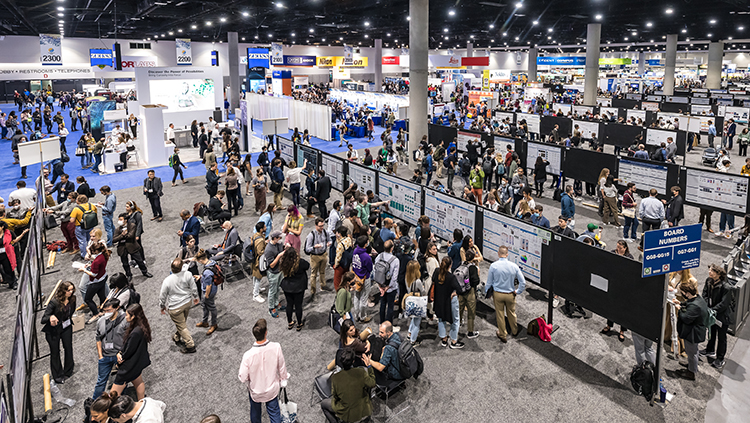
Neuroscience 2025 will be held at the San Diego Convention Center in San Diego, CA, November 15-19, 2025. Each year, scientists from around the world congregate to discover new ideas, share their research, and experience the best the field has to offer. Attend so you can: present research, network with scientists, attend sessions and events, and browse the exhibit hall.
-
eNeuro
An open-access journal from the Society for Neuroscience, eNeuro publishes high-quality, broad-based, peer-reviewed research focused solely on the field of neuroscience. eNeuro embodies an emerging scientific vision that offers a new experience for authors and readers, all in support of the Society's mission to advance understanding of the brain and nervous system. -
Professional Development Programs
SfN careers and training resources serve members worldwide at all stages of their professional lives. They are expanding to provide information about a diversity of career paths and increase online availability. The NeuroJobs Career Center is a major field resource, while programming for women and underrepresented minority scientists is crucial in fostering field's continued diversity. SfN also continues to focus on the professional development of early-career scientists.
-
Science Outreach
SfN's mission emphasizes the importance of engaging and inspiring the public - young and old alike - about the progress and promise of brain research. BrainFacts.org, a public information initiative of The Kavli Foundation, the Gatsby Charitable Foundation, and SfN, provides authoritative and engaging information for the public, educators, and policymakers. Programs such as Brain Awareness help members engage year-round with the public in communities around the globe.
-
Advocacy
SfN advocates strongly for investment in basic science research and the responsible use of animals in research. In the United States, programs bring members to Washington, D.C., for advocacy days and engage them in local activities year round. Globally, SfN partners with many other international and national scientific societies to promote advocacy at the national level.